Atomic magnetometers can be designed for many different measurement environments. QuSpin’s current products focus on two broad application areas: detecting extremely weak magnetic signals in controlled environments and making precise measurements in the Earth’s magnetic field.
QuSpin’s zero-field magnetometers, such as QZFM, are designed for measurements where sensitivity is the primary requirement.
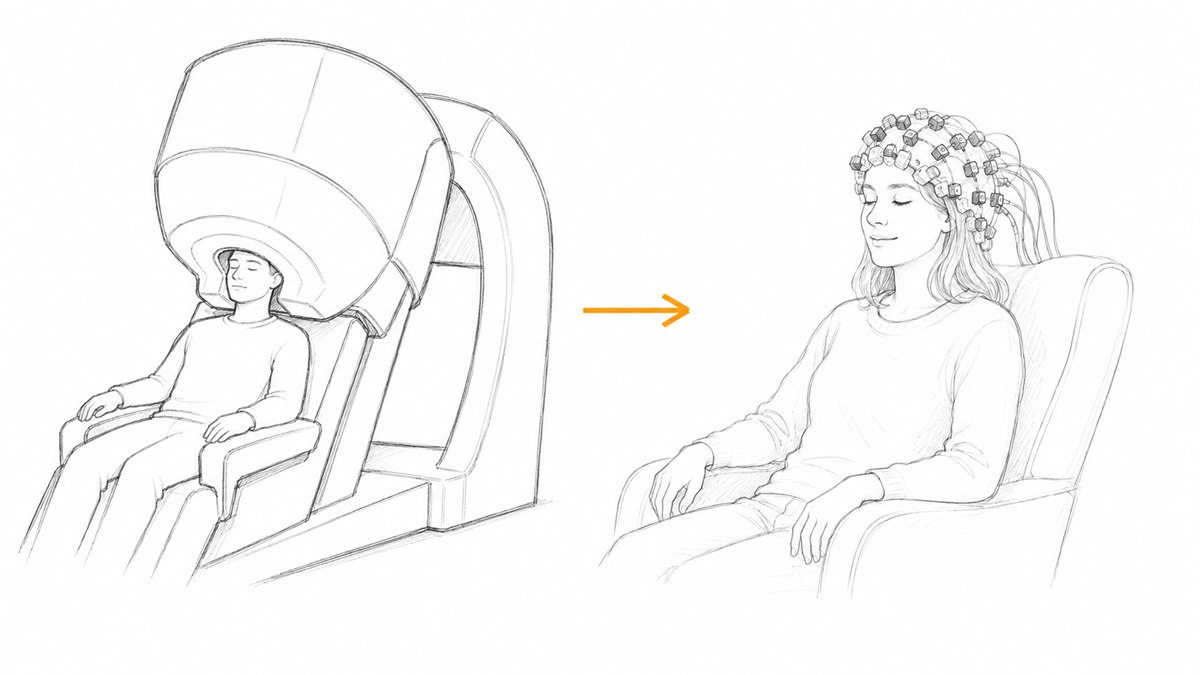
These sensors operate inside magnetically shielded or actively field-controlled environments. By greatly reducing the Earth’s magnetic field and surrounding magnetic noise, they can detect signals in the femtotesla range.
Traditionally, measurements at this sensitivity level relied on superconducting SQUID (Superconducting Quantum Interference Device) magnetometers, which require cryogenic cooling. Zero-field atomic magnetometers provide sensitivity in the same general range without cryogenics. Each sensor head is about the size of a LEGO brick, so it can be placed close to the signal source and arranged in flexible sensor arrays.
The primary application is biomagnetism: measuring the faint magnetic fields generated by electrical activity in the brain, heart, spinal cord, peripheral nerves, and muscles.
Zero-field magnetometers are also used for ultra-low-field NMR and MRI, precision measurement, magnetic shielding studies, and other scientific experiments requiring exceptional sensitivity and strong control of the background magnetic field.
Take-home message: femtotesla sensitivity without cryogenic cooling.
QuSpin’s scalar magnetometers, such as QTFM, are designed to make precise measurements while operating directly in the Earth’s magnetic field.
In outdoor environments, magnetic noise from the surroundings and the measurement platform is often greater than the sensor’s own noise. Our instruments are therefore designed to provide sensitivity appropriate for real field conditions while also minimizing size, weight, and power consumption.
Atomic magnetometers naturally measure the total magnitude of the magnetic field. This scalar measurement is largely independent of sensor orientation, making it especially useful when the instrument is carried, rotated, driven, or flown.
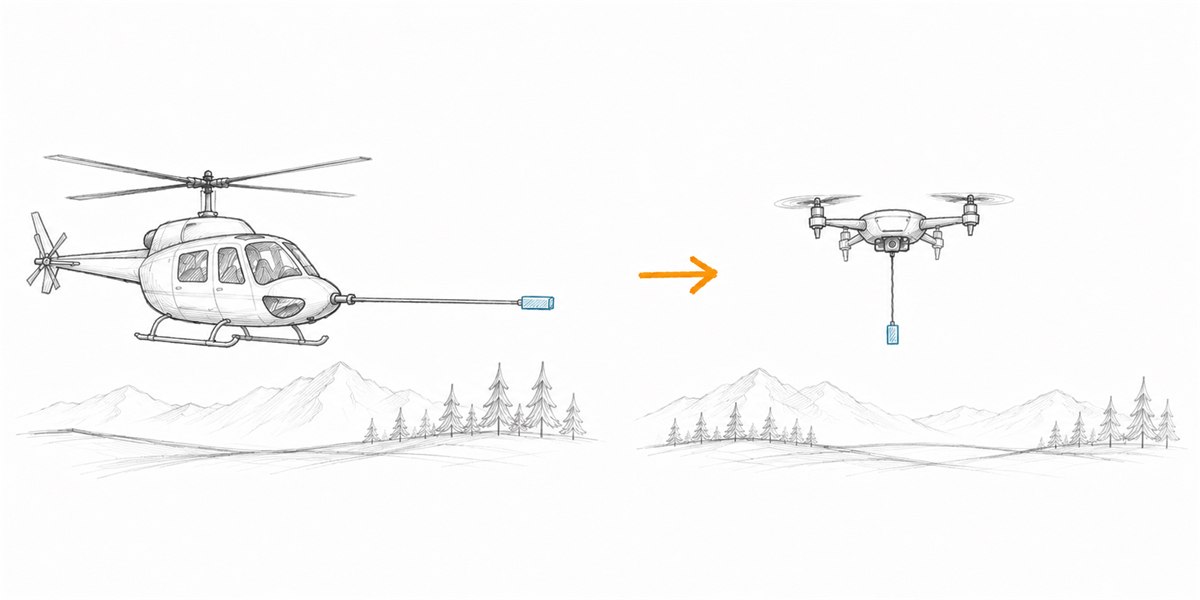
High-performance atomic survey magnetometers have existed for decades, but previous generations were often large, power-intensive, limited in bandwidth, or difficult to integrate onto compact platforms. QuSpin’s instruments combine the sensor with timing, data acquisition, onboard processing, programmable electronics, and the other functions needed for practical magnetic surveys.
This miniaturization allows high-precision measurements to be made from walking systems, vehicles, and small drones—including surveys that previously required helicopters or other large platforms.
Our continuing focus is improving the robustness, stability, integration, and ease of deployment of these instruments for real-world geophysical applications.
Take-home message: high-precision magnetic surveying from compact moving platforms.