3D Model
Drag to rotate
Neuro-1.0 QZFMs Dual-axis or triaxial optically pumped magnetometers, up to 64 sensors per backpack Drag to rotate

An integrated OPM-MEG sensor system built around QZFM sensors for brain activity mapping — sensors, data acquisition, power, synchronization, control electronics, and system software in one platform.
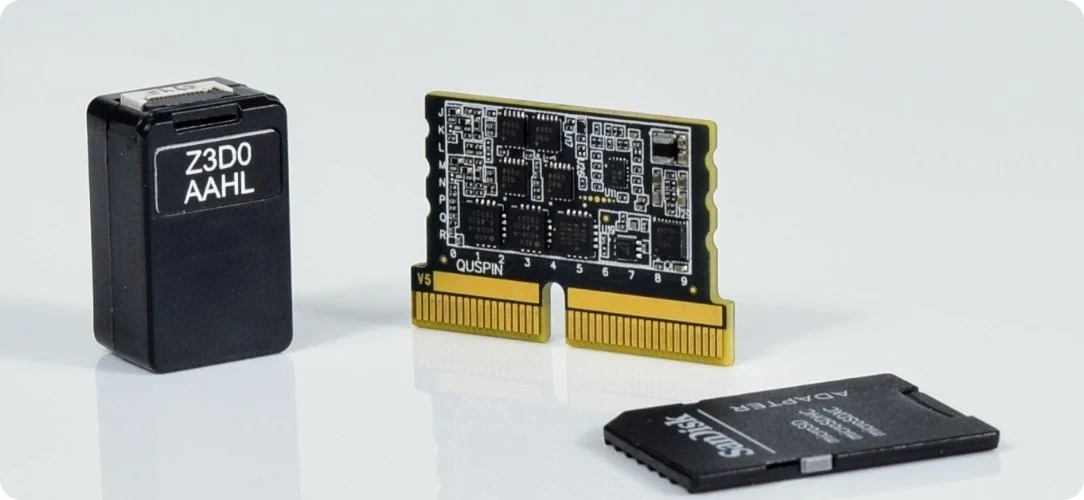
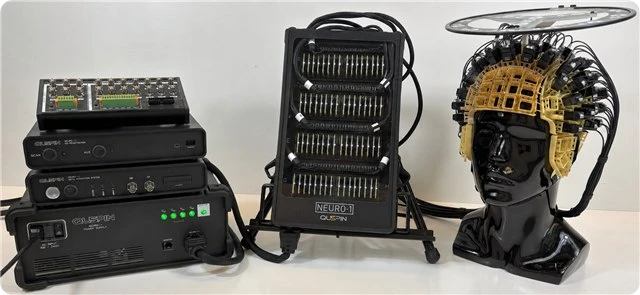
Neuro-1 integrates everything needed to record magnetoencephalography with optically pumped magnetometers — the sensor array, flexible helmet, data acquisition, power, synchronization, control electronics, and system software, engineered together as one platform.
Neuro-1 is compatible with both dual-axis and triaxial QZFM sensors. Each backpack supports 64 sensors, and a system currently runs up to two backpacks, with plans to expand to more. The sensors operate at room temperature, with no cryogenic cooling, and sit close to the scalp in a flexible helmet that fits a broad range of head sizes.
Because the helmet is flexible, sensor positions change with every subject and every setup. Neuro-1 solves this with HALO, its sensor-localization platform, which handles the full co-registration process. Rather than estimating where the sensing volume sits inside each sensor, HALO allows for direct measurement of the configuration actually in use, providing a much higher level of accuracy.
Neuro-1’s Control Center software handles the full workflow:
Measured performance (preliminary, mannequin testing):
Absolute accuracy specifications are pending validation against an independently measured reference geometry. Figures may be updated as testing continues.
Neuro-1 is a single integrated platform: QZFM sensors, compact control electronics, data acquisition, and software, all designed to work together. The cards below introduce each piece — click one to learn more.
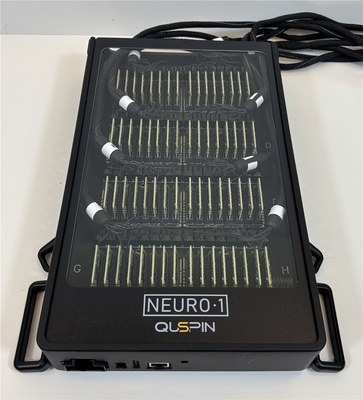 Backpack electronics Holds up to 64 sensor control electronics cards, called Cardmags
 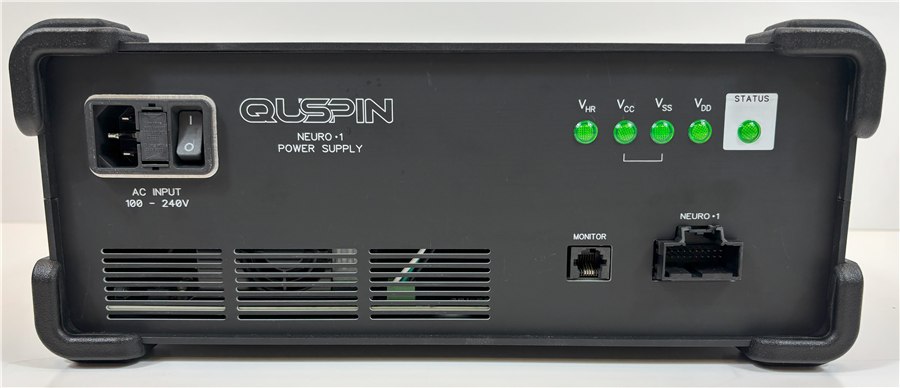 Power supply Provides power for one backpack, each backpack requires a power supply
 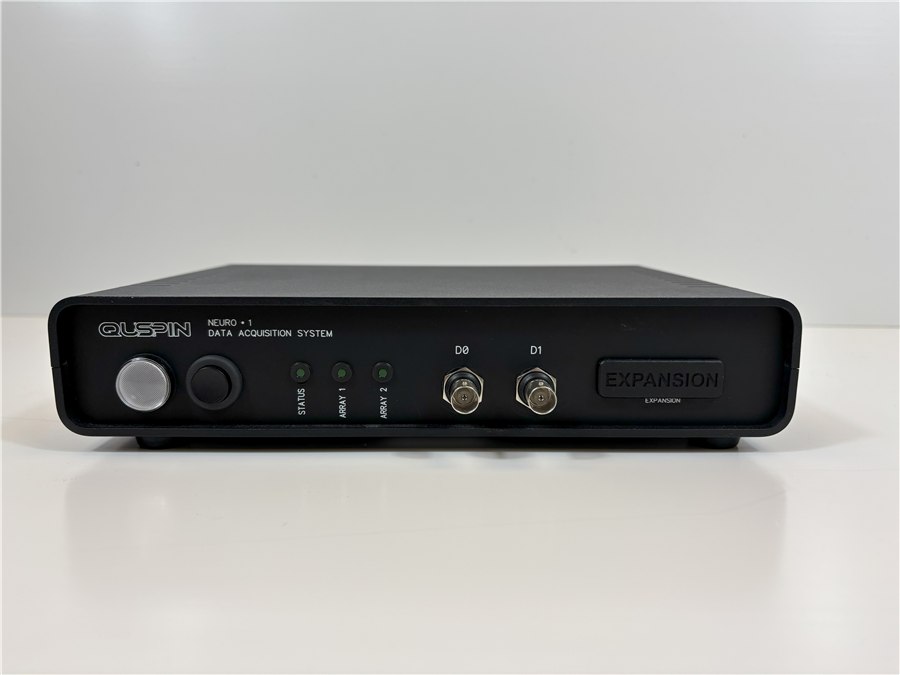 Data acquisition Connects Neuro-1 backpacks to the PC via TCP ports for synchronous data acquisition from multiple backpacks
 Specifications may vary slightly by configuration and operating mode. Contact QuSpin regarding requirements outside the standard configurations.
| Dual-axisFor the highest sensitivity at lower cost. | TriaxialFor complete three-axis vector information. | |
|---|---|---|
| Sensitivity | <15 fT/√Hz, 3–100 Hz; typically 7–10 fT/√Hz | <23 fT/√Hz, 3–100 Hz; typically 15 fT/√Hz on all axes |
| Measurement axes | Z only, Y only, or simultaneous Z and Y | Simultaneous X, Y, and Z |
| Dynamic range | ±5 nT | ±5 nT |
| Calibration | Automated internal reference, optional external HALO | Automated internal reference, optional external HALO |
| Signal outputs | TCP Digital | TCP Digital |
| Latency | Approximately 5 ms | Approximately 5 ms |
The Neuro-1 Control Center is the system’s desktop application — one program for the whole workflow. It controls the sensors, records data in the FIF format, and provides data viewing, with the co-registration steps built in: HALO and HPI Pen localization, frame alignment, and applying the results to a measurement. The videos below walk through each stage, from powering on the system to viewing data.
Planning an OPM-MEG system, or want to see data from a configuration like yours? Email reaches the right person directly and gets our fastest, most complete answers.
Get in touch