Zero-Field Vector Magnetometer

QZFM Gen‑3

A compact, room-temperature vector magnetometer for measuring extremely weak magnetic fields in shielded and near-zero-field environments. Available in dual-axis and triaxial configurations.
Overview

From a single sensor to a whole-head array

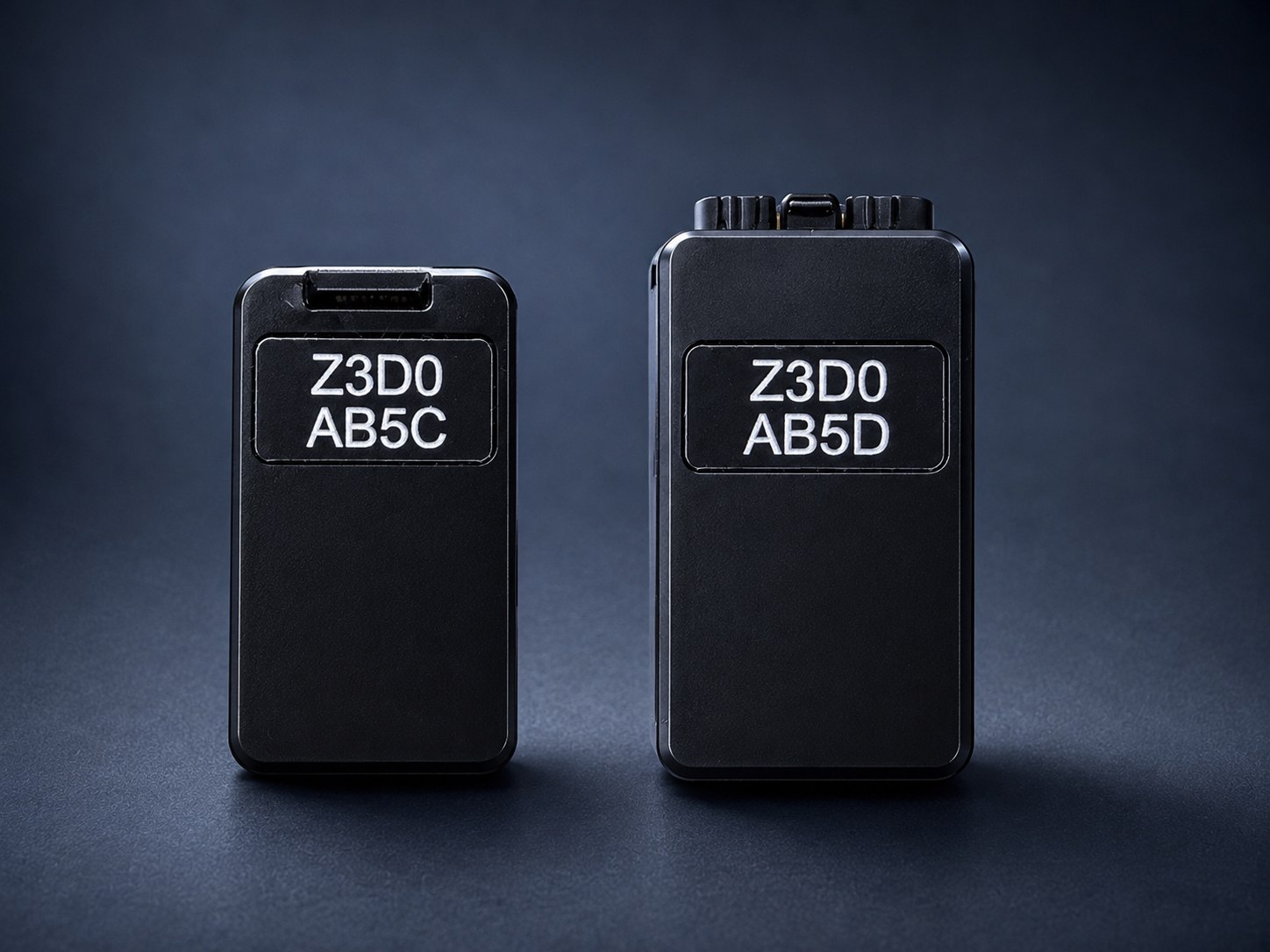
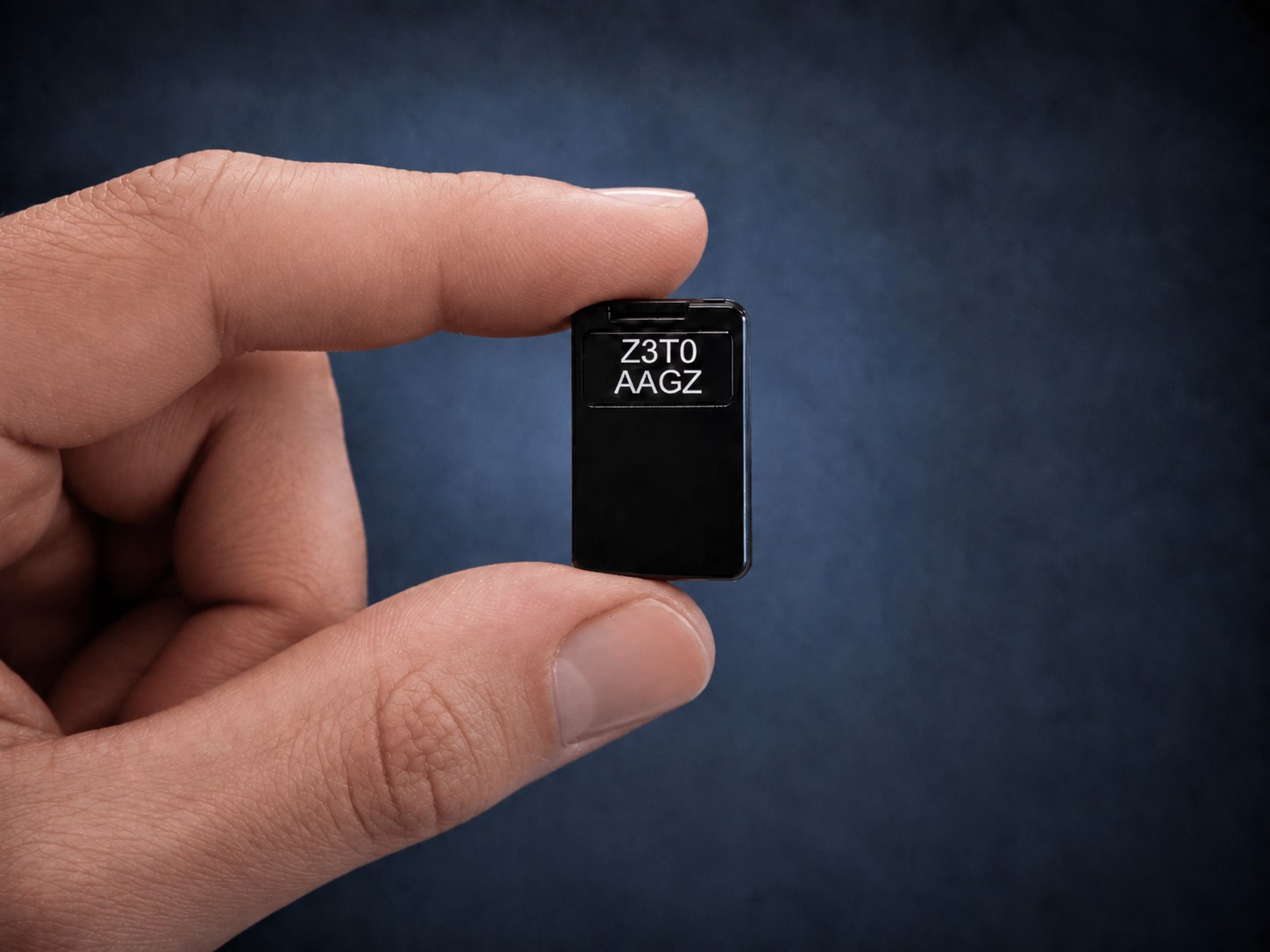
The QZFM packages femtotesla magnetic sensitivity into a sensor head roughly the volume of a LEGO brick. Its compact size and short standoff allow sensors to be placed close to the signal source and densely arranged around the head, heart, or other measurement region.

Low crosstalk makes it practical to operate many sensors together, while internal field-nulling coils and automated calibration simplify setup and help each sensor operate near its optimum measurement point.

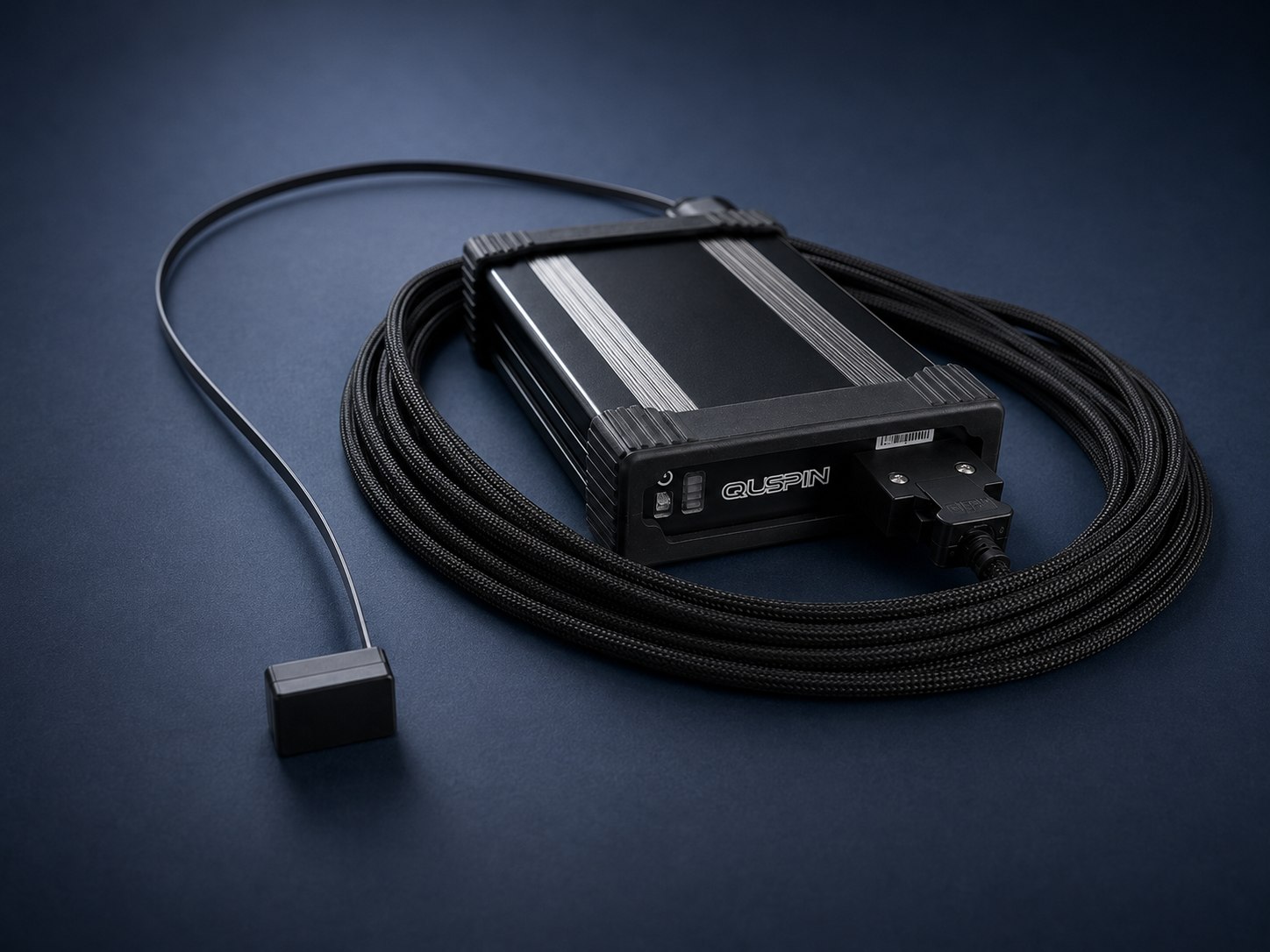
Each QZFM includes matched control electronics with analog and USB digital outputs. The user primarily provides a magnetically shielded or field-controlled environment and a computer.

The same platform can be used as a single laboratory instrument or scaled into a large multichannel biomagnetic system.

Dual-axis sensitivity <15 fT/√Hz
Triaxial configuration 3 simultaneous axes
Sensor head 12.4 × 16.6 × 24.4 mm
Vapor cell to housing 6.5 mm standoff
No cryogenic cooling Room temperature
Specifications

Technical specifications

Specifications may vary slightly by configuration and operating mode. Contact QuSpin regarding requirements outside the standard configurations.

Dual-axis

For the highest sensitivity at lower cost.

Triaxial

For complete three-axis vector information.

Sensitivity
<15 fT/√Hz, 3–100 Hz; typically 7–10 fT/√Hz
<23 fT/√Hz, 3–100 Hz; typically approximately 15 fT/√Hz on all axes
Measurement axes
Z only, Y only, or simultaneous Z and Y
Simultaneous X, Y, and Z
Dynamic range
±5 nT
±5 nT
Calibration
Automated internal reference
Signal outputs 1
Analog and USB digital
Latency
Approximately 5 ms
Approximately 5 ms

1 The analog outputs carry the full measurement. The USB digital output provides a single axis at a fixed 200 Hz, without triggering or multisensor synchronization, and is intended for setup and diagnostics.

Sensor head

Standoff 6.5 mm from vapor-cell center to housing
Sensor dimensions 12.4 × 16.6 × 24.4 mm
Sensor-head power Approximately 0.7 W
Atomic species Rubidium
Sensor cable 2 ft flexible FPC at the sensor end, then 6.5 m round cable

Electronics

Electronics dimensions 3.1 × 11.0 × 16.5 cm
Total power consumption Approximately 5 W
Outputs Analog and USB digital
Sensor matching Factory calibrated and supplied as a matched pair
Measured data

Typical performance

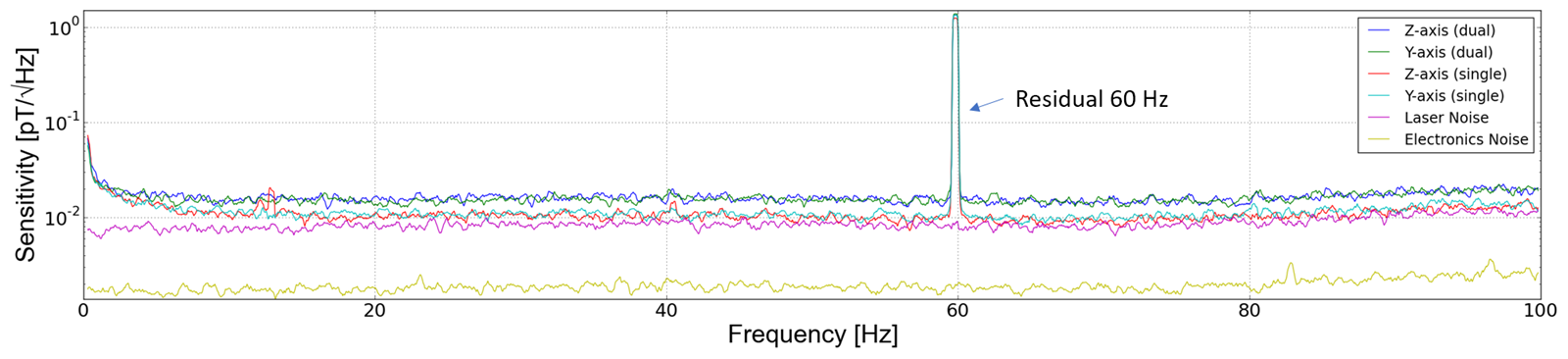
The plots below show representative QZFM performance under controlled laboratory conditions. Actual measured noise can also include residual magnetic noise from the shield, field-control system, electronics, and surrounding environment.
Typical noise floor

Noise spectral density from 0 to 100 Hz, plotted as sensitivity in picotesla per root hertz on a logarithmic axis. Six traces are shown: the Z and Y axes in dual-axis mode, the Z and Y axes in single-axis mode, laser noise, and electronics noise. The sensor traces are flat at roughly 0.01 to 0.02 picotesla per root hertz across the band, rising below about 2 Hz, with a narrow residual 60 Hz peak. Laser noise sits just below the sensor traces and electronics noise well below them.
Typical QZFM noise measured inside a multilayer magnetic shield, for both dual-axis and single-axis operation. The traces include sensor noise and residual magnetic noise within the measurement environment; laser and electronics noise are shown for reference.

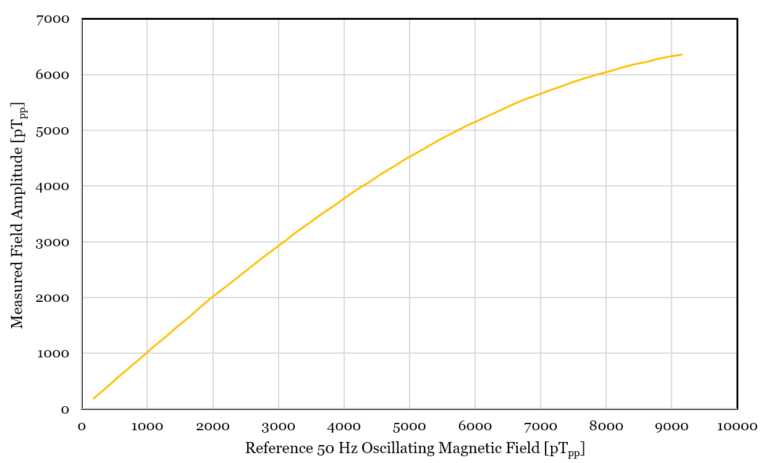
Response near zero field

Measured field amplitude versus the amplitude of a reference 50 Hz oscillating magnetic field, both in picotesla peak-to-peak. The response is linear for small amplitudes and progressively compresses above a few thousand picotesla, reaching about 6,400 pT measured for 9,000 pT applied.
Representative response of the QZFM as a function of applied magnetic field. The sensor provides its highest sensitivity and most linear operation near zero field.
Package

What is included

Each standalone QZFM is supplied as a complete matched sensor and electronics package.
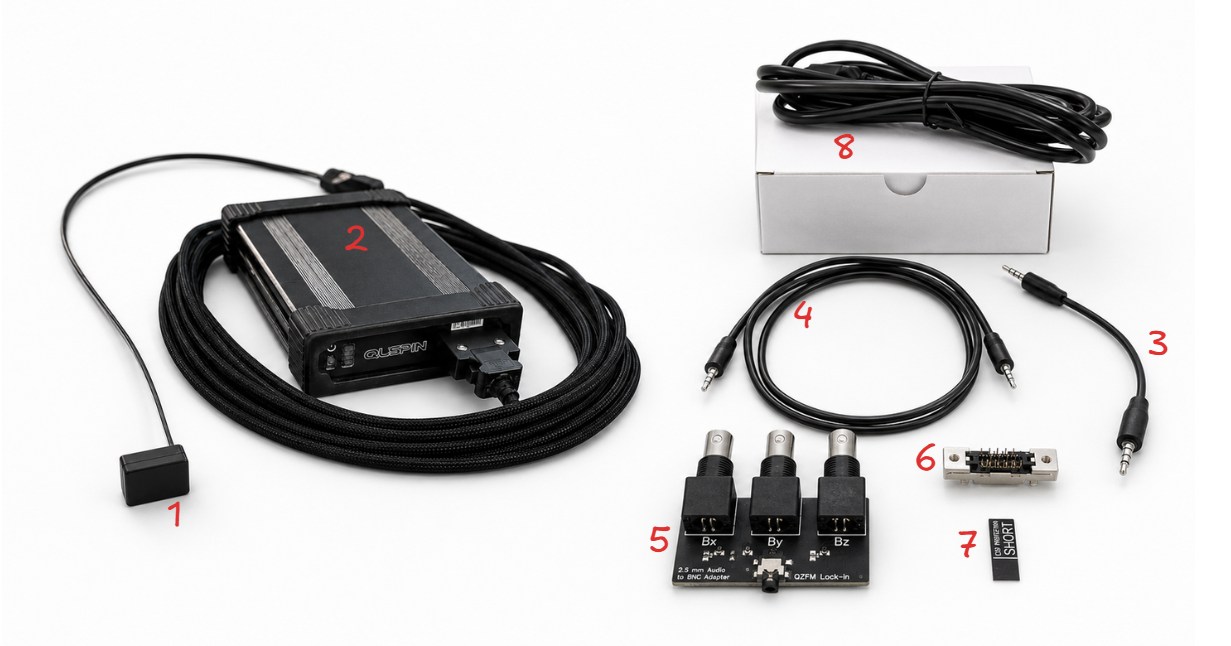
Everything supplied with one standalone QZFM Gen-3, laid out on a white background with each item numbered 1 to 8 to match the list alongside
1 Sensor with 20 ft. round cable and 2 ft. flex cable
2 Electronics module
3 Modulation cable — 3.5 mm to 3.5 mm audio cable, used only for multi-sensor operation
4 Analog output cable — 2.5 mm audio
5 Three-way BNC connector board, for monitoring the analog outputs over BNC
6 Shorting cap for the round cable, electronics side
7 Shorting cap for the sensor head
8 +19 V power supply and U.S. power adapter cables

The sensor head and electronics module are factory calibrated and should be maintained as a matched pair.

A USB hub is also included with shipments containing more than four QZFM sensors. It is not shown above. Software and documentation are available online on this product page.

Before you order

Operating requirements

The QZFM is a zero-field magnetometer designed for magnetically shielded or actively field-controlled environments—not direct operation in Earth’s magnetic field.

01
Near-zero magnetic field Reduce the field at the sensor to approximately 50 nT or below using a magnetic shield or shielded room. Sensor performance depends on the residual field inside the enclosure.
02
Field-nulling for moving sensors Nulling coils are recommended when the sensor moves, such as in wearable MEG, to reduce signals caused by motion through residual field gradients.
03
Analog data acquisition Use a 16‑ or 24‑bit data-acquisition system for multichannel recording, triggering, and synchronization. The 200 Hz USB output is intended primarily for setup and diagnostics.
04
Computer and software A compatible 64-bit computer running the supplied QZFM software is required, with the correct interface configured for the selected output.
05
Magnetic-noise control Identify and manage nearby magnetic materials, motors, power electronics, and other potential noise sources.

Strong background fields or magnetic transients can push the sensor outside its operating range. The magnetic environment should be treated as part of the measurement system.

Use cases

Representative applications

The QZFM is used wherever extremely weak magnetic signals must be measured in a controlled, near-zero-field environment.

Biomagnetism

Magnetic fields produced by electrical activity in the body.

Magnetoencephalography Brain activity, including wearable and high-channel-count OPM-MEG systems.
Magnetocardiography Adult and fetal cardiac signals for biomedical and physiological research.
Muscles, nerves, and spinal cord Skeletal muscle, peripheral nerve, and spinal electrical activity.

Physics and precision measurement

Experiments requiring exceptional sensitivity and field control.

Ultra-low-field NMR and MRI Nuclear-magnetic-resonance detection in ultra-low-field and controlled-field experiments.
Magnetic relaxometry Detection and characterization of magnetic particles and their relaxation response.
Precision research Shielding studies, field mapping, atomic-physics experiments, and sensor development.
Pricing

Pricing

Qty 1–3 $10,000
Qty 4–7 $8,500
Qty 8–15 $8,000
Qty 16–32 $7,700

Per sensor, US dollars.

Resources

Documentation and resources

Getting started

Mechanical information

Research resources

Accessories

Building a multichannel OPM-MEG system?

The Neuro-1 combines QZFM sensors with integrated data acquisition, power, synchronization, control electronics, and system software.

Explore Neuro-1